


What Happens During a Full Car Service? Everything You Need to Know
Summary: A full car service helps drivers understand how regular maintenance protects vehicle performance and safety. This blog covers inspections, oil changes, brake checks, engine care, fluid checks, diagnostics, and the benefits of keeping your car reliable for everyday journeys.
Your car often gives you small signs when something is not working correctly, but many problems can begin without any clear warning. A strange noise, slower pickup, poor fuel mileage, or a small warning light can become a bigger repair issue if it is ignored. That is why regular Car Service Palmdale CA is important for keeping your vehicle safe, dependable, and ready for daily driving.
A full car service is not only about changing the oil. It is a complete check of different parts of your vehicle to find possible problems, improve performance, and help avoid sudden breakdowns. Whether you drive your car every day or only use it for short trips, regular maintenance can help your vehicle stay in better condition.
What Is Included in a Full Car Service?
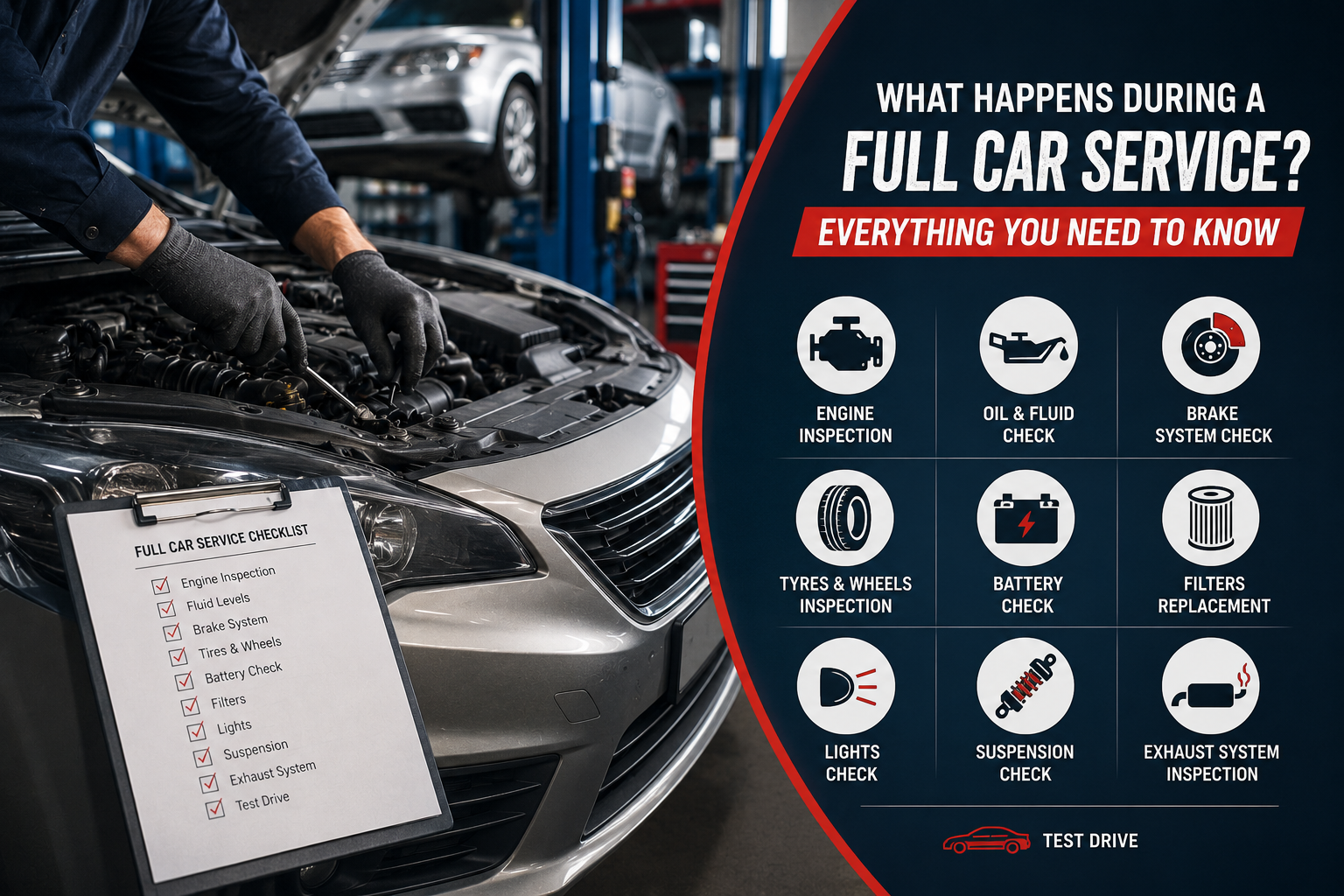
A full car service includes different checks, adjustments, and maintenance tasks that help your vehicle continue working properly. The exact service may depend on your car’s make, model, mileage, and overall condition.
During a complete service, a professional technician usually checks:
- Engine condition and performance
- Oil and filter levels
- Brake system
- Tires and tire pressure
- Battery condition
- Fluids and leaks
- Suspension and steering parts
- Belts and hoses
- Air conditioning system
- Vehicle safety features
These checks help find small issues before they turn into costly repairs.
Step #1: Vehicle Inspection and Diagnostic Check
The first part of a full car service is understanding your vehicle’s current condition. A technician carefully checks your car and looks for signs of damage, wear, or performance problems.
Modern vehicles also have computer systems that store important details about how different parts are working. A computer diagnostic check helps find problems that may not be easy to notice during a regular inspection.
For example, a warning light on your dashboard may show an issue with the engine, sensors, or another important system. Proper testing helps technicians find the actual cause of the problem instead of only fixing the visible signs.
Step #2: Checking and Changing Engine Oil
Engine oil is one of the most important parts of vehicle care. It helps engine parts move smoothly and lowers friction between moving parts. Over time, oil becomes dirty and may not protect your engine as well as it should.
During a full service, technicians check:
- Oil level
- Oil condition
- Oil leaks
- Oil filter condition
If needed, the old oil and filter are replaced to help your engine run cleaner and work more efficiently.
Step #3: Brake and Safety System Inspection
Your brakes are one of the most important safety parts of your vehicle. During a full car service, technicians check brake pads, rotors, fluid levels, and other brake parts.
They look for signs such as:
- Squeaking or grinding sounds
- Longer stopping distance
- Uneven brake wear
- Low brake fluid
Finding brake issues early can help prevent unsafe driving situations and expensive repairs in the future.
Step #4: Checking Engine, Transmission, and Other Major Systems
A full service also includes checking major systems that affect how your vehicle drives. The engine, transmission, and related parts need regular care to maintain smooth and reliable performance.
Technicians may inspect:
- Engine belts and hoses
- Transmission fluid
- Cooling system
- Exhaust system
- Timing belt condition
- Suspension parts
Regular checks can help increase the life of important vehicle parts and keep your car running smoothly.
Step #5: Fluid Checks and Maintenance
Your vehicle depends on several fluids to work correctly. During a full service, technicians check fluid levels and look for leaks or signs that fluids need to be replaced.
Common fluids include:
- Coolant
- Transmission fluid
- Brake fluid
- Power steering fluid
- Windshield washer fluid
Keeping these fluids at the right levels helps protect different vehicle systems and supports better driving performance.
Why Regular Car Service Matters
Many drivers wait until their vehicle has a serious problem before visiting an auto repair shop. However, regular maintenance is a better way to take care of your car.
A full car service can help you:
- Improve vehicle reliability
- Maintain better performance
- Find problems early
- Support longer vehicle life
- Drive with more confidence
Your car is an important investment, and regular care helps protect it for many years.
How Often Should You Get a Full Car Service?
The right service schedule depends on your vehicle’s age, mileage, driving habits, and manufacturer recommendations. Some vehicles may need more frequent maintenance, especially if they are used for long drives, heavy traffic, or many short trips.
If you are unsure about your vehicle’s maintenance needs, a professional inspection can help you understand which services your car needs.
Final Insights:
A full car service is about more than repairing problems. It is about providing your vehicle with the care it needs to stay safe, reliable, and comfortable.
When you need reliable Car Tune Up Palmdale CA, Rocco’s Honda & Acura Specialists is ready to help keep your vehicle in great condition. With over 40 years of hands-on experience, we provide honest repairs, detailed inspections, and quality maintenance for Honda, Acura, and other imported vehicles. Our goal is simple: help you drive with confidence knowing your car has received expert care from a trusted local team.
Call us today at (661) 949-1011 or email roccoshonda1969@gmail.com to schedule your service and give your vehicle the care it needs to stay dependable for years.
FAQs
1. What happens during a full car service?
A full car service includes checking the engine, brakes, fluids, tires, filters, and other parts to keep your vehicle safe and running smoothly.
2. How often should I get a full car service?
Most vehicles need regular service based on mileage, driving habits, and manufacturer advice. A technician can suggest the right schedule for your car.
3. Is a full car service worth the cost?
Yes, a full car service helps find small problems early, improves vehicle performance, supports safety, and can prevent expensive repairs later.
4. What is checked during a car service?
Technicians check engine oil, brakes, tires, battery, fluids, belts, hoses, suspension, and other important parts to make sure your car works properly.
5. Can regular car service help my vehicle last longer?
Yes, regular car service keeps important parts in good condition, reduces wear, prevents major problems, and helps your vehicle perform better for many years.