

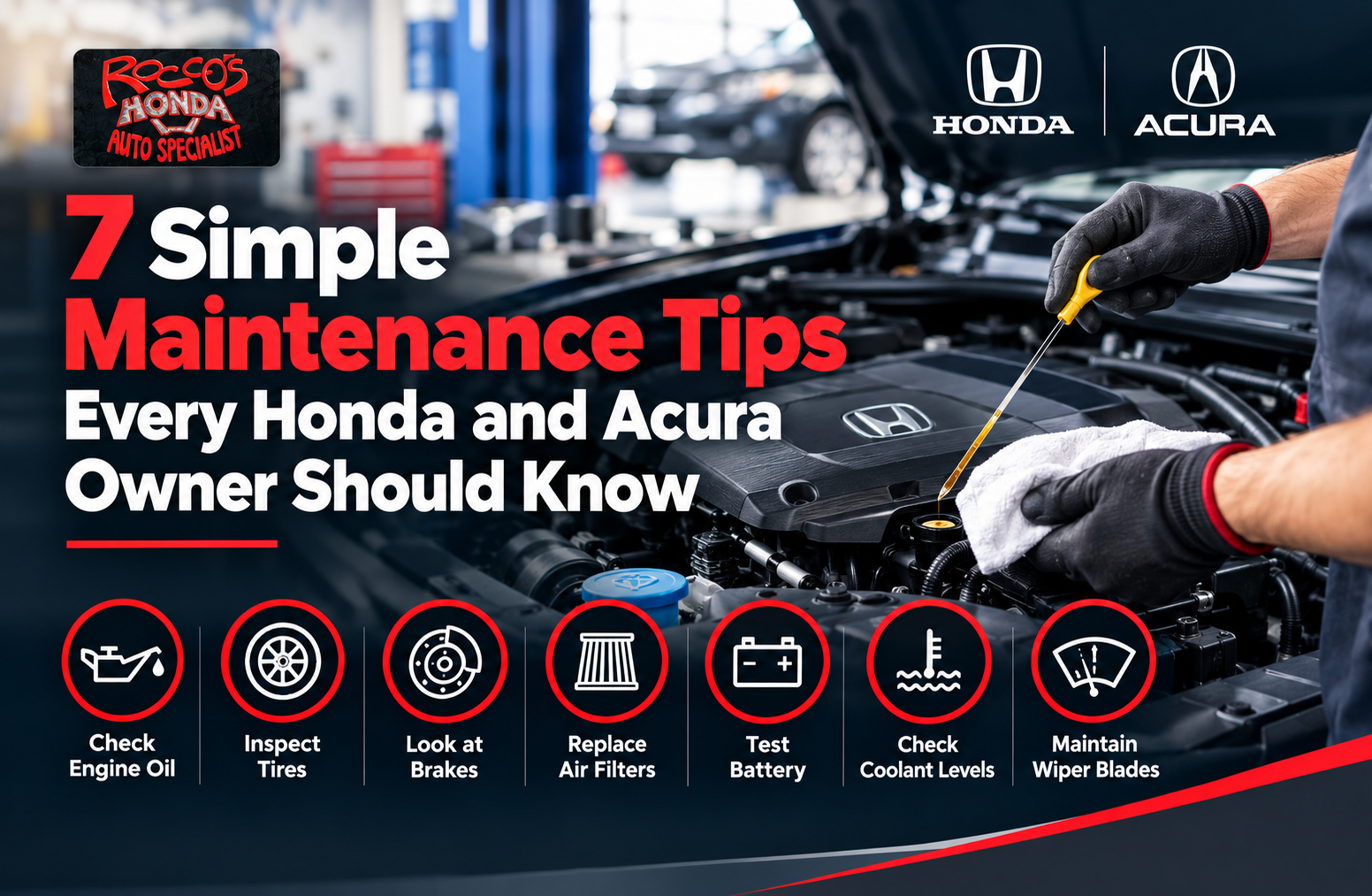
7 Simple Maintenance Tips Every Honda and Acura Owner Should Know
Summary: Keep your Honda or Acura reliable with simple maintenance habits that can prevent bigger problems. Learn essential tips for oil changes, tires, brakes, filters, warning lights, factory service, and early repair needs.
Owning a Honda or Acura can be a great experience, but even a reliable vehicle needs regular care. Simple maintenance can help prevent unexpected breakdowns, protect important parts, and keep your vehicle performing well. Staying ahead of basic Lancaster Honda repair needs can save you time, money, and stress later.
The good news is that vehicle maintenance does not have to be complicated. A few simple habits can make a real difference.
1. Keep Up With Regular Oil Changes
Engine oil helps reduce friction between moving parts and control heat inside the engine. As you drive, oil becomes dirty and loses some of its ability to protect the engine.
Follow the maintenance schedule recommended for your specific Honda or Acura model. If you drive in heavy traffic or frequently make short trips, your vehicle may need more frequent attention.
Do not wait for unusual engine noise or warning lights before checking your oil and service needs.
2. Check Your Tires Regularly
Your tires affect braking, handling, comfort, and fuel efficiency. Make it a habit to check:
- Tire pressure
- Tread depth
- Uneven tire wear
- Cracks or visible damage
- Signs of a slow leak
Check the recommended tire pressure for your vehicle rather than relying on the number printed on the tire. If one tire keeps losing air or the tread wears unevenly, have the issue checked.
3. Pay Attention to the Brakes
You use your brakes every time you drive, so changes in braking performance should never be ignored.
Watch for signs such as squealing, grinding, vibration, pulling to one side, or a brake pedal that feels different than usual. These symptoms can point to worn brake parts or another issue that needs attention.
Regular brake inspections can help catch problems before they become more expensive or affect your safety.
4. Replace Filters When Needed
Your Honda or Acura relies on different filters to help protect its systems. Engine air filters help keep dirt and debris away from the engine, while cabin air filters help improve the air entering the passenger area.
A dirty engine air filter can affect airflow, while an old cabin filter can reduce airflow from the vents.
Check your owner’s manual or maintenance schedule to know when these filters should be inspected or replaced.
5. Do Not Ignore Warning Lights
A warning light on the dashboard is your vehicle’s way of telling you that something needs attention. It does not always mean there is a major problem, but ignoring it can allow a small issue to become more serious.
If a warning light appears, pay attention to how your vehicle is driving. If you notice poor acceleration, unusual noises, shaking, overheating, or other changes, have the vehicle inspected promptly.
Computer diagnostics can help identify many electronic and mechanical issues and provide useful information about the problem.
6. Follow the Factory Maintenance Schedule
Regular maintenance is more than changing the oil. Your Honda or Acura has a recommended service schedule that can include inspections, fluid checks, filter replacements, belt service, and other maintenance based on mileage and time.
Following this schedule gives you a clear idea of what your vehicle needs and when it needs it.
It is especially important for older or high-mileage vehicles. Staying consistent with maintenance can help you spot worn parts before they create bigger problems.
7. Listen to Your Car
Sometimes your vehicle tells you something is wrong before a dashboard warning appears. A new sound, smell, vibration, or change in handling should get your attention.
For example, you may notice:
- A clicking or grinding sound
- A new vibration while driving
- Difficulty starting
- A burning smell
- Rough idling
- Changes in acceleration
- Unusual fluid leaks
Do not ignore these signs simply because the car is still running. Getting a small concern checked early may help prevent a more serious repair later.
Final Remarks:
At Rocco’s Honda & Acura Specialists, we make maintenance and repairs easier with experienced service for Honda, Acura, other import vehicles, and select domestic models. From routine maintenance and brake service to diagnostics, transmission service, A/C service, and more, we help you understand what your vehicle needs.
If you have been searching for a Honda Acura specialist near me, talk to our team. With 40 years of experience, we are ready to help you keep your vehicle safe, reliable, and ready for the road. Call us at (661) 949-1011 to schedule your service, or email roccoshonda1969@gmail.com with your questions.
Give your Honda or Acura the experienced care it deserves with Rocco’s Honda & Acura Specialists.
FAQs
1. How often should I change the oil in my Honda or Acura?
Follow your vehicle’s recommended service schedule. Oil change timing can vary based on the model, driving habits, mileage, and road conditions.
2. What maintenance does a Honda or Acura need regularly?
Regular maintenance includes oil changes, tire checks, brake inspections, filter replacement, fluid checks, and services listed in your vehicle’s maintenance schedule.
3. What are signs that my Honda or Acura needs repair?
Warning lights, unusual sounds, vibrations, fluid leaks, rough driving, starting problems, or changes in braking can mean your vehicle needs a professional check.
4. Why is regular maintenance important for Honda and Acura vehicles?
Regular maintenance helps find small problems early, keeps important parts working properly, supports safe driving, and can help prevent costly repairs later.
5. What should I do when my Honda or Acura warning light comes on?
Do not ignore it. Pay attention to changes in driving, and have your vehicle checked soon to find the cause and prevent further problems.