

Honda Maintenance: Which Services Should You Never Skip?
Summary: Keeping a Honda in good shape means staying on top of key maintenance services. This guide covers oil changes, brakes, fluids, factory maintenance, timing belts, computer diagnostics, and extra care for older Honda vehicles.
Owning a Honda often means having a dependable vehicle for many years, but even a reliable car needs regular care. If you have been searching for a Honda expert mechanic near me, you may already know that skipping basic maintenance can turn small problems into costly repairs. The good news is that many major problems can be found early when you follow a proper maintenance schedule.
At Rocco’s Honda & Acura Specialists, we believe maintenance is not just about fixing something after it breaks. It is about knowing what your Honda needs and taking care of it before a small issue affects your daily driving.
Follow Your Honda’s Maintenance Schedule
Your Honda has a recommended maintenance schedule based on mileage, driving conditions, and the age of your vehicle. These services help keep important parts working properly.
Maintenance can be different for each model and year, so always check your owner’s manual for the service times recommended for your vehicle.
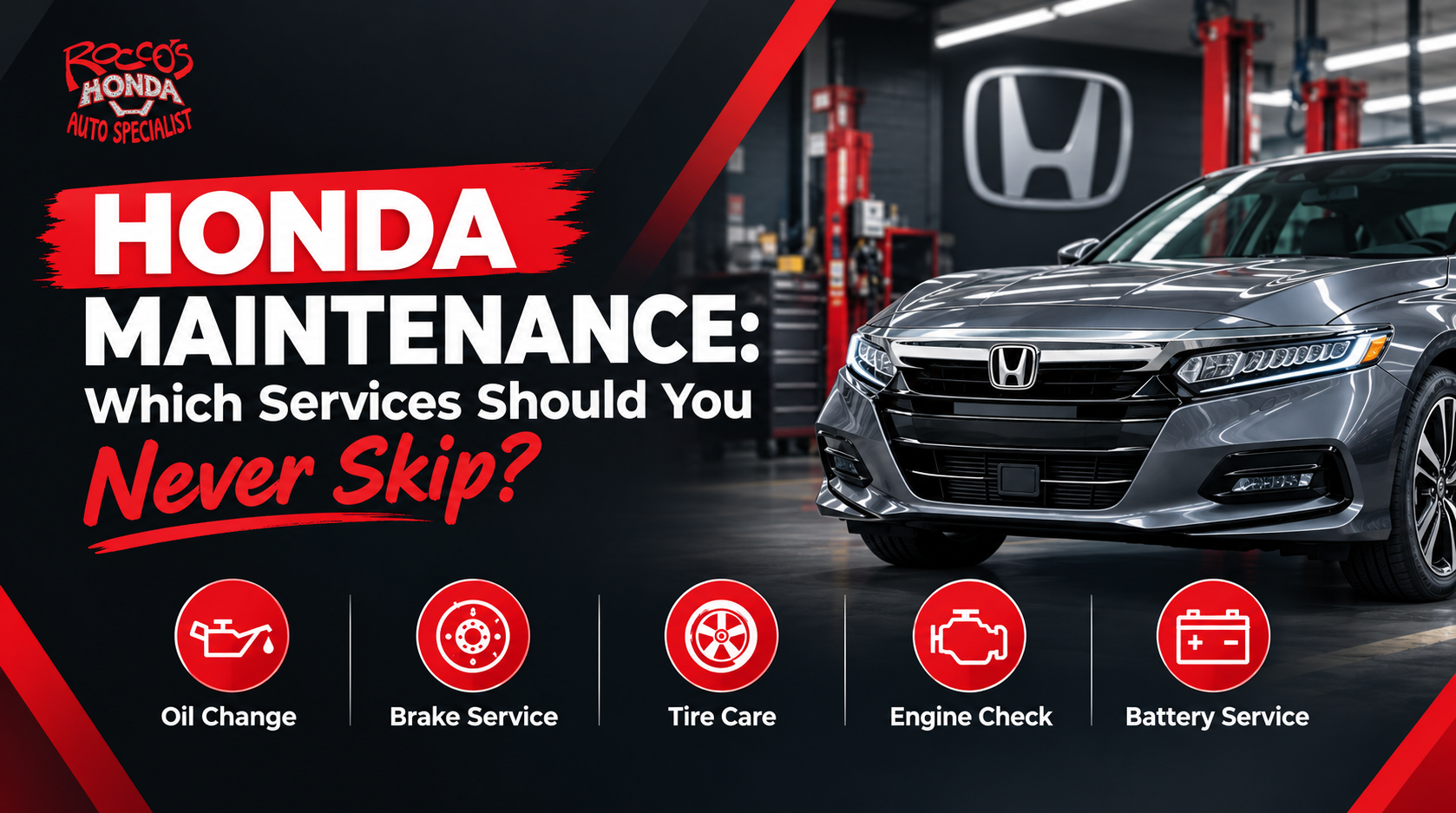
Some services you should not ignore include:
- Regular oil and filter changes
- Brake checks and service
- Tire checks and rotations
- Fluid checks and changes
- Battery checks
- Air filter replacement
- Factory-recommended maintenance
- Timing belt service when needed
Following these service times gives your mechanic a chance to check your vehicle before a small problem becomes more serious.
Never Skip Oil and Filter Service
Engine oil helps reduce friction and heat inside the engine. Over time, oil gets dirty and may not protect engine parts as well as it should.
Waiting too long between oil changes can put extra stress on the engine. The oil filter is also important because it helps remove dirt and other harmful particles from the oil.
The right oil type and service time depend on your Honda model and driving conditions. Staying on schedule is one of the easiest ways to help protect your engine and support long-term performance.
Pay Attention to Your Brakes
Your brakes are one part of your vehicle that you should never put off.
Brake pads naturally wear down with use. If they become too thin, they may not stop your vehicle as well as they should. Ignoring warning signs can also cause other brake parts to wear out.
Watch for signs such as:
- Squealing or grinding sounds
- Shaking when braking
- A brake pedal that feels different
- The vehicle pulling to one side while braking
- A brake warning light
If something feels different when you stop, have the brakes checked instead of waiting for the problem to get worse.
Keep Fluids at the Right Levels
Your Honda needs several fluids to keep its systems working properly. These can include engine oil, coolant, brake fluid, transmission fluid, and other fluids depending on the model.
Low, dirty, or leaking fluids can be a sign of a problem that needs attention.
A regular check can help find leaks or fluid problems before they cause bigger issues. This is especially important for older Hondas and vehicles with higher mileage.
Do Not Ignore Factory Maintenance
Factory-recommended maintenance involves more than changing the oil. As your Honda reaches certain mileage points, other checks and services may be needed.
These services can include checking belts, filters, fluids, brakes, suspension parts, and other systems.
Skipping these services just because your vehicle still feels fine can cause problems later. Some parts can wear slowly without giving you a clear warning.
Keep Up With Timing Belt Service
If your Honda uses a timing belt, follow the replacement schedule recommended by the manufacturer.
A timing belt helps keep important engine parts moving in the right order. Because it can wear out with age and mileage, waiting until it breaks is not a good way to care for your vehicle.
Not every Honda uses a timing belt, so the right service depends on your specific model and engine.
Do Not Overlook Computer Diagnostics
Modern Hondas use computer systems to check many parts of the vehicle. When a warning light comes on, it should not be ignored.
Computer diagnostics can help find trouble codes and give useful information about where a problem may be starting. However, reading a code is only one part of finding the problem. A skilled mechanic should also inspect the vehicle and find the actual cause.
This can help prevent unnecessary part replacements based only on a warning light.
Give Your Honda Extra Attention as It Gets Older
Maintenance becomes even more important as a Honda gets older and has more miles. Rubber parts can wear out, fluids can lose their effectiveness, and parts that once worked well may eventually need service.
A regular inspection can help you stay ahead of these changes.
Instead of waiting for your Honda to leave you stranded, keep track of its mileage, service history, warning lights, unusual sounds, and changes in the way it drives. These small details can help your mechanic find problems sooner.
Wrapping Up:
Good maintenance starts with knowing who you can trust when your Honda needs attention. At Rocco’s Honda & Acura Specialists, we take the time to look at the bigger picture, listen to what you have noticed, and explain what your vehicle may need. Our 40+ years of experience with Honda, Acura, and other import vehicles helps us handle both routine service and more complex concerns with care.
If you are looking for Car diagnostics Palmdale CA, we are here to help you find the cause of a warning light, unusual sound, or change in how your Honda drives. Do not wait until a small concern becomes a bigger interruption to your day.
Call (661) 949-1011 or email roccoshonda1969@gmail.com to schedule your service with Rocco’s Honda & Acura Specialists.
FAQs
1. What Honda maintenance services should you never skip?
Never skip oil changes, brake checks, fluid service, factory maintenance, tire care, and timing belt service when your specific Honda requires it.
2. Why should I follow my Honda’s maintenance schedule?
Your Honda’s maintenance schedule shows when important services are due. Following it helps keep your vehicle working properly and catches problems early.
3. Is an oil change really necessary for Honda maintenance?
Yes. Regular oil changes help protect engine parts, reduce friction, remove dirt, and keep the engine running smoothly as your Honda gains mileage.
4. Why should I never delay Honda brake service?
Brake problems can affect how safely your Honda stops. Checking worn brake parts early can help prevent bigger repairs and keep braking performance reliable.
5. Does a Honda need more maintenance as it gets older?
Yes. Older Hondas may need closer attention because parts wear with age and mileage. Regular checks can help find small issues before they grow.