

6 Signs Your Car May Have an Oil Leak or Engine Lubrication Problem
Summary: Recognizing early signs of an engine oil leak can prevent costly car repairs. Learn six common warning signs, including oil spots, low oil levels, dashboard lights, unusual noises, burning smells, and engine overheating, plus the importance of timely inspection.
Your car’s engine works hard every time you start it. From daily commutes to longer road trips, its moving parts depend on engine oil to run smoothly. Oil reduces friction, controls heat, and protects important engine components from early wear. But what happens when oil starts leaking or the lubrication system stops working properly?
You might notice a small spot under your parked car or hear an unusual engine sound. These early signs may seem minor, but ignoring them can lead to overheating, damaged engine parts, and expensive repairs.
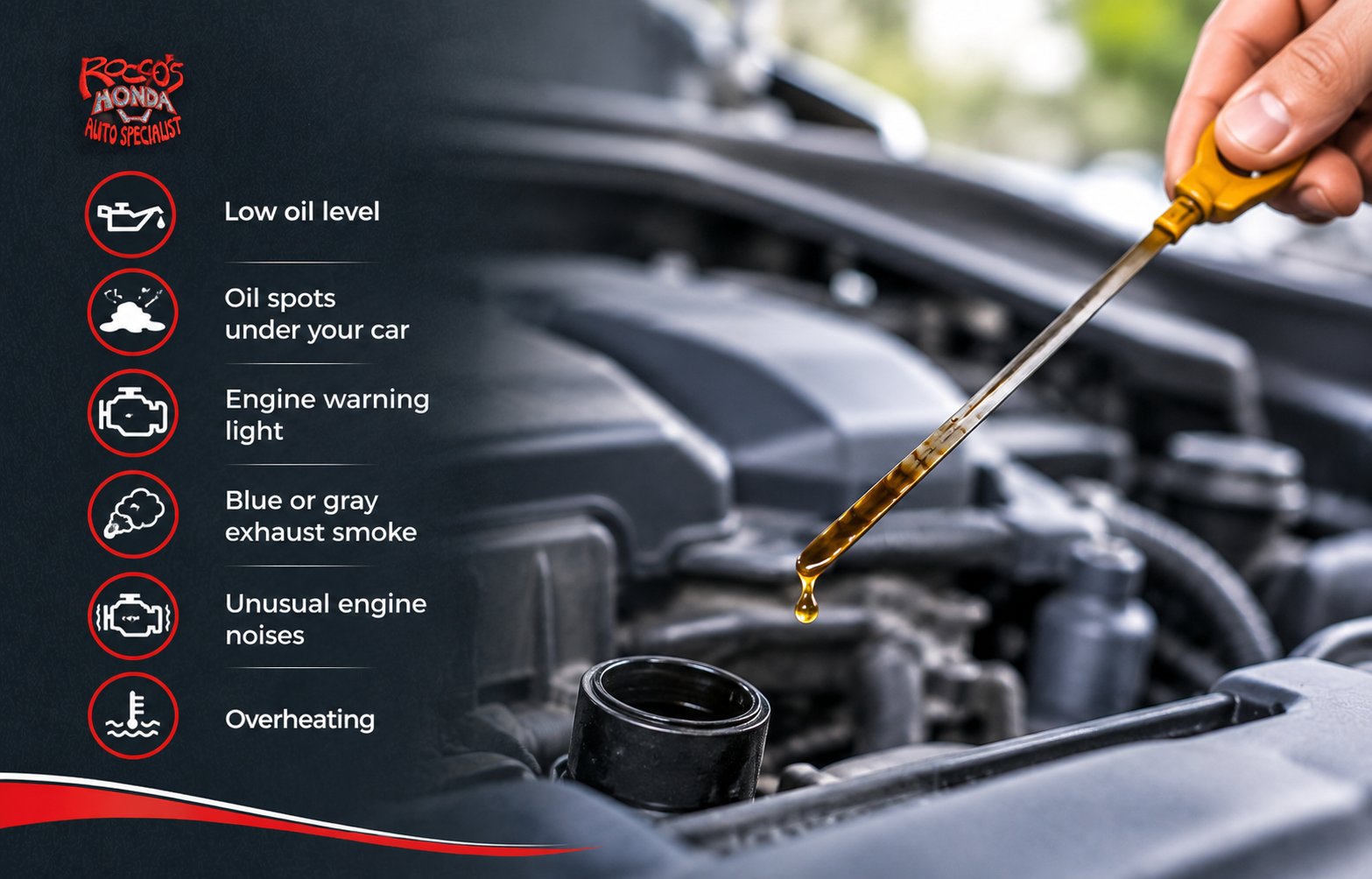
Here are six signs that your car may have an oil leak or engine lubrication problem and may need Engine Repair Palmdale CA.
1. Dark Oil Spots Under Your Parked Car
Dark brown or black spots where your car was parked are among the most common signs of an engine oil leak.
Engine oil can escape through worn gaskets, damaged seals, loose drain plugs, or other engine connections. When it reaches the ground, it may leave greasy patches underneath your vehicle.
A few things to check include:
- Dark brown or black spots under the engine area.
- Fresh oil marks appearing after parking overnight.
- An oily smell around the front of your vehicle.
Not every fluid leak is engine oil. Transmission fluid and coolant can also leave marks underneath your car. A professional inspection can identify the fluid and its source.
2. Your Engine Oil Level Keeps Dropping
When was the last time you checked your engine oil? If the level keeps dropping between oil changes, something may be wrong.
A noticeable drop may point to an external leak or internal oil consumption. Worn piston rings, valve seals, and other engine components can allow oil to enter the combustion chamber and burn.
Check your dipstick regularly, especially before longer drives. If the oil level repeatedly falls below the recommended range, do not simply keep adding oil without investigating the reason.
Finding the source early can prevent poor lubrication and unnecessary engine wear.
3. The Oil Pressure Warning Light Turns On
Seeing the oil pressure warning light on your dashboard is not something you should ignore.
This warning usually indicates that your engine is not receiving the oil pressure needed for proper lubrication. Possible causes include:
- Low engine oil level.
- A failing oil pump.
- A clogged oil filter.
- Damaged internal engine components.
- Oil leaks affecting the lubrication system.
Remember, the oil pressure warning light does not simply mean you need an oil change. It can indicate a serious mechanical problem.
What should you do? Safely pull over, turn off the engine, and check the oil level when it is safe. Avoid continuing to drive with the warning light on. Have the vehicle inspected to identify the cause.
4. Unusual Ticking, Knocking, or Grinding Sounds
Your engine normally produces some operating noise. However, a new ticking, knocking, or grinding sound deserves attention.
Engine oil creates a protective layer between moving metal components. When oil levels become too low or oil pressure drops, these parts may experience increased friction.
You might notice:
- Ticking sounds coming from the engine.
- Knocking noises that become louder as the engine runs.
- Grinding sounds during engine operation.
These noises can indicate lubrication problems, although other mechanical faults may produce similar sounds.
Do not ignore an unusual engine sound, particularly when it appears alongside low oil levels or a dashboard warning.
5. A Burning Oil Smell While Driving
Have you noticed a sharp, burning smell after driving for a while? Leaking engine oil could be one possible reason.
When oil escapes from a gasket or seal and drips onto hot engine components, such as the exhaust manifold, it can burn and produce a noticeable smell.
Other signs may include:
- A burning smell inside or outside the vehicle.
- Light smoke coming from the engine compartment.
- Oil residue around engine seals or covers.
A burning oil smell should never be dismissed as normal engine heat. Leaking oil contacting hot surfaces can also create a fire risk.
If you notice smoke or a strong burning smell, stop driving when safe and arrange a professional inspection.
6. Your Engine Runs Hotter Than Usual
Engine oil does more than lubricate moving parts. It also helps carry heat away from important engine components.
When the oil level becomes too low or the lubrication system cannot circulate oil properly, friction increases. This can contribute to excessive engine heat and additional stress on internal components.
Watch for signs such as:
- The temperature gauge rising above its usual range.
- An overheating warning appearing on the dashboard.
- Unusual engine noises combined with rising temperatures.
However, overheating is not always caused by an oil problem. Coolant leaks, radiator issues, and thermostat problems can also cause the engine to run hot.
If your temperature warning appears, stop safely and switch off the engine. Continuing to drive an overheating vehicle can cause serious damage.
Why Early Engine Inspection Matters
Oil leaks and lubrication problems rarely fix themselves. A damaged gasket, worn seal, or failing oil pump can gradually affect engine performance and reliability.
Delaying an inspection may allow a small issue to damage expensive internal components.
Professional Engine Repair starts with identifying the actual cause rather than simply topping up the oil or replacing random parts. A proper inspection can determine whether your vehicle needs a gasket replacement, oil system repair, or further engine work.
This is particularly important for Honda and Acura owners who want to maintain dependable performance and avoid preventable engine damage.
The Bottom Line:
Rocco’s Honda & Acura Specialists understands the importance of identifying engine problems early and addressing them correctly. Our team focuses on Honda Acura Repair near me, helping vehicle owners identify oil leaks, lubrication concerns, and other engine-related issues before they become more serious.
Instead of guessing what is wrong, have your vehicle properly checked and understand what your engine needs. Your Honda or Acura deserves attention that keeps its performance, reliability, and long-term condition in mind.
Noticing an oil leak, burning smell, or unusual engine noise? Do not wait for the next warning light. Contact Rocco’s Honda & Acura Specialists at (661) 949-1011 or email roccoshonda1969@gmail.com to get started. Taking care of a small engine problem today can help you avoid a much bigger repair tomorrow.
FAQs
1. What are the common signs of an engine oil leak?
Common signs include dark oil spots under your car, low oil levels, a burning smell, engine smoke, and unusual noises while driving.
2. Can I drive my car with an engine oil leak?
Driving with an oil leak can be risky. Low oil levels may damage engine parts, so get the leak checked before continuing regular use.
3. Why does my engine oil level keep dropping?
Engine oil levels may drop because of leaking seals, worn gaskets, damaged piston rings, or valve seals that allow oil to burn inside the engine.
4. What happens if my engine does not get enough oil?
Without enough oil, engine parts experience more friction and heat. This can cause unusual noises, overheating, serious engine damage, and costly repairs.
5. When should I get my Honda or Acura checked for an oil leak?
Get your Honda or Acura inspected when you notice oil spots, falling oil levels, burning smells, unusual engine noises, or an oil pressure warning light.